Nankai University International E-Forum on Artificial Intelligence and Robotics
(第80期)
2026年Betway·必威(西汉姆联)人工智能与机器人国际学术讲坛
College of Artificial Intelligence, Nankai University
报告时间:2026年4月19日(周日)10:00~11:00
报告地点:Betway·必威(西汉姆联)津南校区 必威betway西汉姆联南楼225
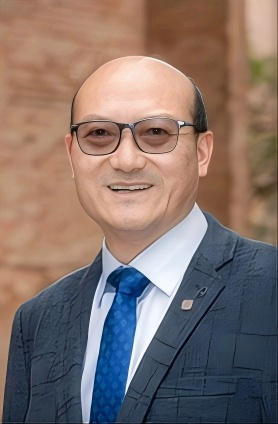
报告嘉宾:陈文华 教授
专家单位:The Hong Kong Polytechnic University, Hong Kong, China
研究领域:Advanced control systems, robotics, autonomous systems, particularly unmanned aircraft and intelligent vehicles
报告人简介:
Wen-Hua Chen received the M.Sc. and Ph.D. degrees in automatic control from Northeastern University, Shenyang, China, in 1989 and 1991, respectively.
He was a Professor in autonomous vehicles with the Department of Aeronautical and Automotive Engineering, Loughborough University, Loughborough, U.K., until 2025. He is currently with Hong Kong Polytechnic University, Hong Kong, as a Chair Professor in robotics and autonomous systems, the Director of Research Centre for Low Altitude Economy (RCLAE), and the Director of University of Macau-Hong Kong Polytechnic University Joint Research Centre for Robotics and Embodied Intelligence (CREI). He has considerable experience in control, signal processing and artificial intelligence and their applications in aerospace, automotive, and agriculture systems. In the last 20 years, he has been working on the development and application of unmanned aircraft and intelligent vehicle technologies, spanning autopilots, situational awareness, decision making, verification, remote sensing for precision agriculture and environment monitoring.
Prof. Chen is a Chartered Engineer, and a Fellow of IEEE, the Institution of Mechanical Engineers and the Institution of Engineering and Technology, U.K. He was awarded five-year U.K. EPSRC (the Engineering and Physical Sciences Research Council) Established Career Fellowship in developing new control theory for robotics and autonomous systems.
报告题目:Active Learning in Uncertain Environments: Dual Control for Robots and Autonomous Systems
报告摘要:
For an autonomous system operating in an unknown or changing environment, it is desirable to design a control system to keep it always operating at its best possible performance (i.e., in terms of specified productivity or efficiency). This talk introduces a new active learning approach, namely dual control for exploitation and exploration (DCEE), to this type of auto-optimisation control problems. In this integrated perception and decision-making framework, control action not only drives an autonomous system moving towards a believed optimal operational condition, but also aims to reduce the uncertainty of its belief by actively exploring and learning the unknown environment. Initial progress has been made in establishing its convergence and stability, which is very challenging for other AI algorithms. Autonomous search of the source of airborne dispersion using a robot and maximum power point tracking in solar farming are used as case studies to illustrate the proposed DCEE approach. Its link with reinforcement learning and active inference in neuroscience is also discussed.